 I've found the antidote in Los Angeles:


 Now, thanks to this article in the New York Times, I have learned that this packaging is called "clamshell" and that there is a reason for this madness.


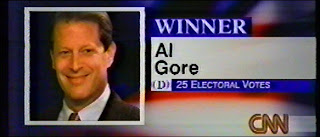 As the night wore on, good news turned to bad and joy turned to disappointment. The delicious meal that I enjoyed earlier that evening no longer sat so well with me. Since then, each time I face a plate of Penne alla Vodka, memories of that night flood back and my stomach begins to churn.
 Given this history, I'm not sure why that, as I plan for this year's election night dinner, I am considering tempting fate by putting Penne alla Vodka back on the menu. Perhaps I am hoping it will exorcise the ghosts of 2000 once and for all.
 I have been feeling more and more nervous about the outcome and my previous cautious optimism has now given way to high-anxiety. It gave me no comfort to read in the NY Times that many other Americans share these feelings with me.


 Reading the article rekindled dormant memories of the stadium where, while living in New York during the eighties, I spent many nights and afternoons drinking warm-ish and semi-flat beer from cardboard cups and eating dirty-water dogs.
 During those years, I also enjoyed the lightning fastball of Ron Guidry and revelled in the circus surrounding Billy Martin's repeated comings and goings as Manager.
 Thinking about those days makes me wish I had made one last trip to see a game this year. Unfortunately, I didn't think about it. Living 3,500 miles away in another country has allowed my interest in the Yankees to drift away.


 The widget that powers this utility shows my most recent entries into LibraryThing, so as I progress through the thirty-year catalogue catch-up, it will show the last five books I have entered. Once I have completed the process and start entering what I'm currently reading, it will again become accurate.

Sun-starved Britons who holidayed at home this year to help save the planet and ease the credit crunch are now rushing to book overseas trips. Travel firms say there has been a huge "never again" backlash after a rain-drenched August, during which thousands of families decided not to fly to cut their carbon footprint. . . Many customers booked as soon as they got home from this year's summer trip.So, bugger austerity and saving the environment. The masses are voting with their feet and they want sunshine on their holidays! Looks like Boris Johnson was right all along.
Jonathan White, managing director of VFB Holidays, said: "We've spoken to lots of people who have sat through the wet weather here. Their view is simple: blow the recession: We need to get away somewhere warm. . .we've already opened our 2009 bookings and are hearing from people who've returned from rain-soaked UK holidays vowing 'never again'."

“His image of himself was always the handsome, celebrity flyboy. Now somebody else is the celebrity,” the colleague continued, "while John looks in the mirror and sees his face marred by skin cancer and looks at the TV and sees his dashing self-image replaced by visions of William Frawley. . ."


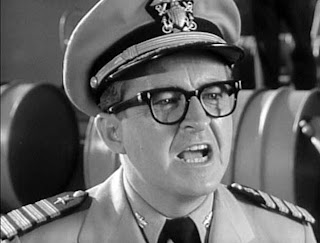 . . .and for Attorney General. . .
Bookings to European destinations from the U.K. are falling. . . "People in the U.K. are trading down, and British resorts stand to benefit from that," said Bob Cotton, chief executive of the British Hospitality Association, an industry body. "The sinking pound makes the sector much more appealing for Europeans looking for a bargain."
Leading U.K. politicians are following suit. Prime Minister Gordon Brown, who usually holidays on Cape Cod in the U.S., will stay at home in the eastern English seaside town of Southwald this summer. Conservative opposition leader David Cameron, who also usually vacations abroad, is heading for Cornwall on England's southern coast.
 Now, heading for sunny Greece or Tuscany for one's holiday has become downmarket. It's cool to stay in the UK away from the masses. It's environmentally friendly and frugal, especially in these tough economic times.
 Boris Johnson, London's recently elected Mayor, has bucked the trend. In a commentary for the Daily Telegraph, Boris skewers politicians who think it is their duty to holiday close to home and says that he will go somewhere "as sunny and foreign as possible."
 According to the Dallas Morning News, the vendor has apologised and the Texas GOP has denounced him, pledging to donate the $1,500 it received in rent for his stall to a charity. Pretty lame, really.
This not-to-subtle reminder of reality might give us sneak peak at what's to come as the campaign unfolds over the next several months. While many of us like to think that we've moved beyond race, the unfortunate truth remains that even as America contemplates electing a black president, racial tensions have not entirely abated and an often-suppressed undercurrent of racism persists in many parts of the country.
Until Republican party leaders take racism seriously (fat chance - remember the Republicans are the party of fear), there will be no shortage of those willing to exploit racial prejudice for political gain.
 When the real thing came along about twenty years later, it wasn't any smaller and it didn't have the added benefit of also serving as a shoe!
 It took a while to get where we are today.


 The New York Times reports that Belgian Paul Otlet first outlined the concept of the internet and the world wide web in 1934. The article says that:
In 1934, Otlet sketched out plans for a global network of computers (or “electric telescopes,” as he called them) that would allow people to search and browse through millions of interlinked documents, images, audio and video files. He described how people would use the devices to send messages to one another, share files and even congregate in online social networks. . .
. . .Otlet (pronounced ot-LAY) described a networked world where “anyone in his armchair would be able to contemplate the whole of creation.”
Although Otlet’s proto-Web relied on a patchwork of analog technologies like index cards and telegraph machines, it nonetheless anticipated the hyperlinked structure of today’s Web.
 The concept grew out of a project he started in 1895 to catalogue all of the world’s published knowledge and he eventually accumulated more that 12 million entries. His “mechanical, collective brain” was his solution to the obvious limitations of his paper-based system.


Scientists have shown off the blueprint for an "acoustic cloak", which could make objects impervious to sound waves.Of course it's all theoretical, but the Spanish scientists who developed the blueprint say they would like to make and test the cloaking material in a lab as the next step.
The technology, outlined in the New Journal of Physics, could be used to build sound-proof homes, advanced concert halls or stealth warships.
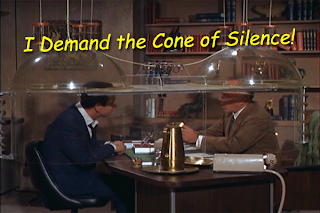 Who knew that Mel Brooks and Buck Henry were so far ahead of their time?


 To clarify things for guests, race organizers helpfully included a leaflet outlining the dress code with event tickets and have published a guide on their website featuring photos of "suitable" and "unsuitable" attire, designated by green checkmarks or red x's.
In a humorous "A to Z of Do's and Don'ts, women are also advised to keep their underwear under wraps during the five-day meeting starting on Tuesday.I guess this woman didn't get the message! What would the Queen say?
"Knickers," it says. "A definite yes, but not on show please ladies."
The same guide warns that streaky tan lines are "a total fashion faux pas", and that how a hat looks "from the neck up is the most important and can make or break an outfit".
Men are also expected to adhere to the code, which means they must wear either black or grey morning dress, including "a waistcoat, with a top hat, which must be worn at all times in the Royal Enclosure".


 Posts
All Comments


